

In this third part of my aromatherapy series, I’m going to look at some practical ways you can enjoy and use essential oils at home. In Part One I shared a little about my background in aromatherapy and some of the oils I love working with, and in Part Two I explored several other essential oils and their properties.
Here in Part Three, I’ll look at simple ways of using essential oils in everyday life, such as oil burners and diffusers. I’ll also introduce carrier oils (sometimes called base oils), which are used to dilute essential oils for massage and other preparations. Carrier oils each have their own properties and can greatly enhance a blend.
Aromatherapy doesn’t have to be complicated or expensive. With just a few good oils and some basic equipment, it’s easy to bring the benefits of aromatherapy into your home.
Oil Burners
Essential oils are incredibly concentrated plant extracts and should rarely be used neat on the skin. This is where carrier oils come in. They not only dilute the essential oils safely, but many of them have wonderful properties of their own that nourish and support the skin.
I’ll also share a few thoughts on the different ways oils can be used in the home. Over the years I’ve used everything from very simple oil burners to modern ultrasonic diffusers. Each has its place, and like most things in aromatherapy, it often comes down to personal preference.
Aromatherapy is wonderfully flexible. What one person finds relaxing or uplifting might be completely different for someone else. Part of the pleasure is experimenting with different oils, blends and methods until you discover what works best for you.
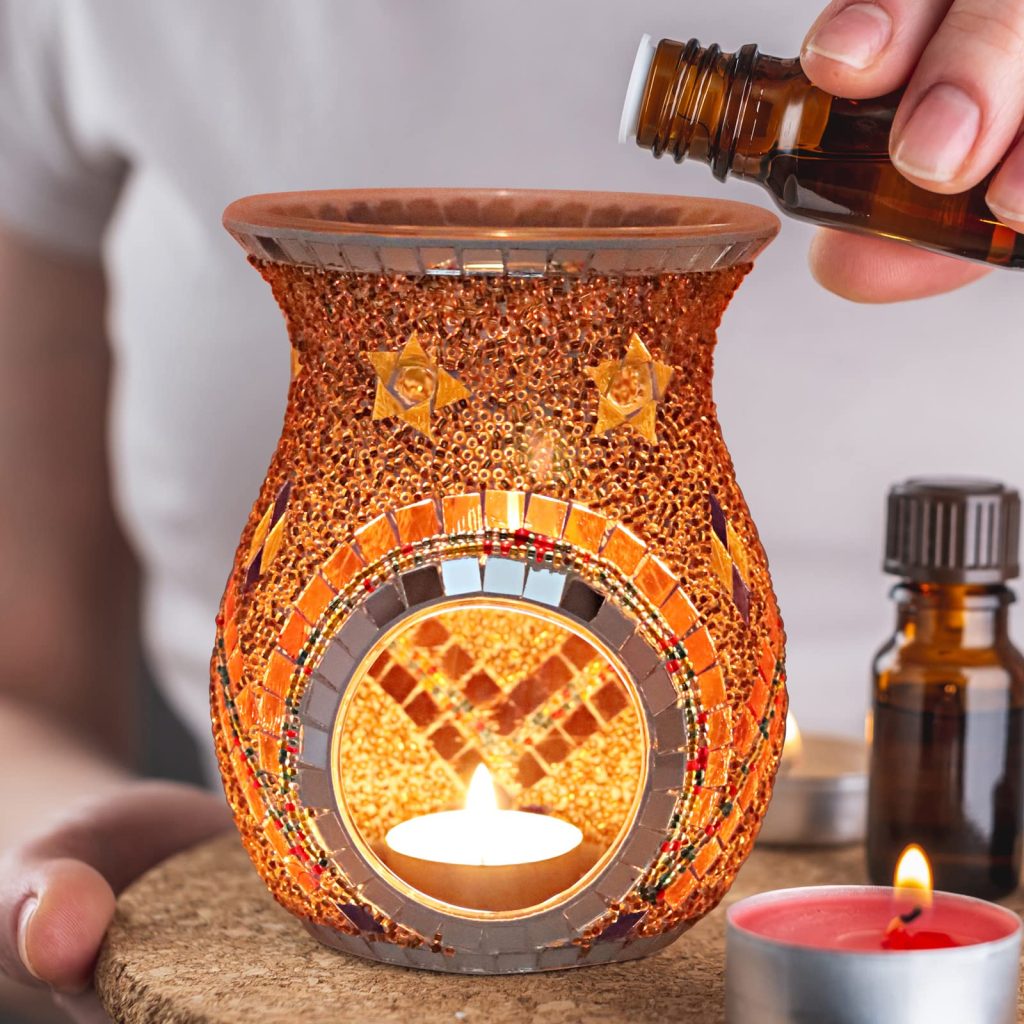
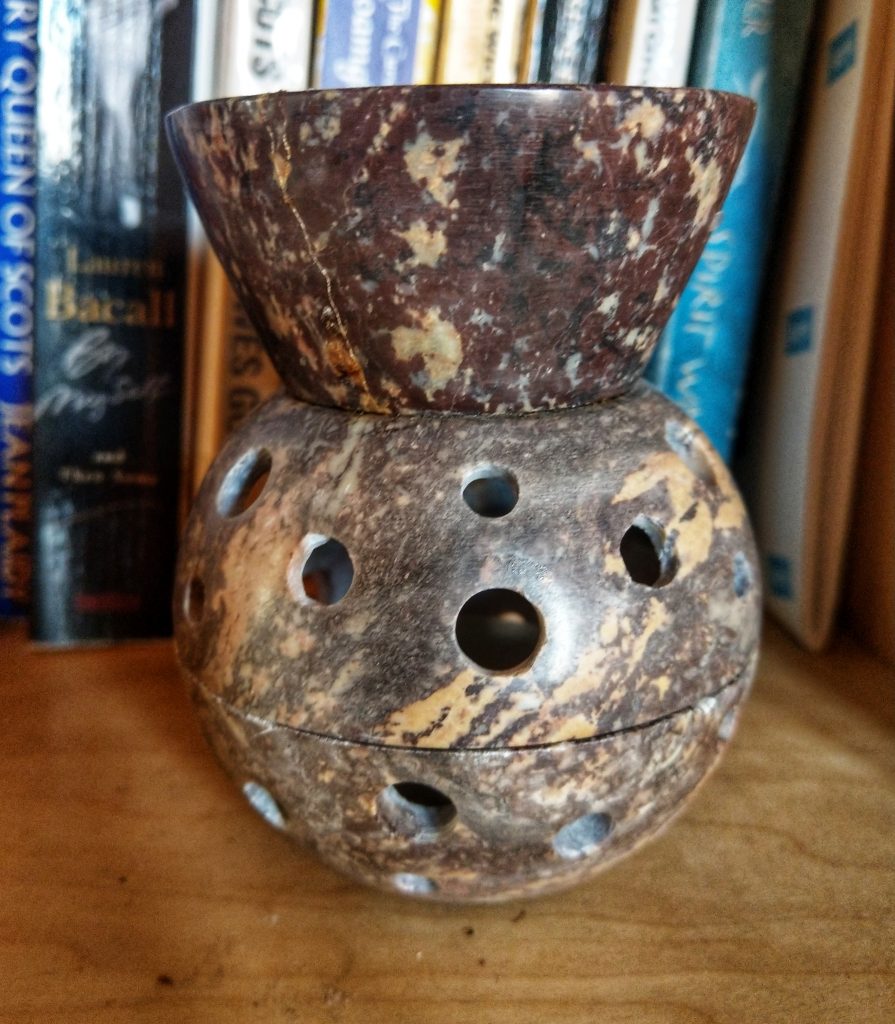
One of the simplest and cheapest ways of enjoying aromatherapy is by warming essential oils in an oil burner. You can get many types of oil burners from very simple to quite elaborate. I’ve used oil burners for over 40 years. It’s also a great way to experiment with different blends and aromas and enjoy them very easily.
Tip
Try getting a burner with a bigger bowl as you won’t have to top it up as much.
Disadvantages to Oil Burners
Well they literally “burn” the oil in water, the can get very hot (from the water and the source of heat, normally a tealight) and are unsafe around small children and animals. The water can dry up quickly (especially in small capapcity burners)
I tend to knock them over all the time as brush past them. so they can be a fire hazard! This sounds like they are terrible, but they are not. They just need careful consideration and take appropriate measures for safety and they are a wonderful addition to a home and working space.
Diffusers
Another way to use essential oils is by using a diffuser. This is the one I use Kharis Ultrasonic Aroma Diffuser
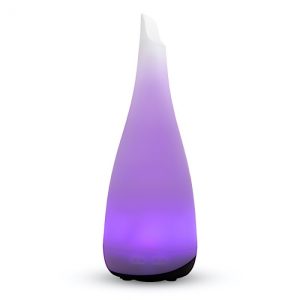
The diffuser is great as it doesn’t “burn” the oils like an oil burner. It gently releases them through a fine mist of water vapour. Just fill with water and a few drops of essential oils. When it is empty it shuts off automatically.
Carrier Oils
Carrier or base oils are what I use in massage to dilute the essential oils before they are applied to the skin. Essential oils are extremely concentrated and should almost always be mixed with a carrier oil before being used in massage. I also use them with a dispersing agent and the essential oils mixed in bath oils. The carrier oils/essential oils are added to home preparations I choose and prepare to order for clients.
Carrier oils are usually cold-pressed vegetable oils made from seeds, nuts or kernels. They are generally mild in aroma and allow the fragrance of the essential oils to come through without overpowering the blend.
In aromatherapy massage I usually prepare a blend of essential oils in a carrier oil before beginning the session. Carrier oils also work beautifully in bath oils, creams, salves and lotions.
Each carrier oil has its own qualities. Some are light and easily absorbed by the skin, while others are richer and more nourishing. Choosing the right carrier oil can enhance a blend and tailor it to a particular skin type or purpose.
As with essential oils, quality matters. I always prefer organic cold-pressed oils and store them in dark bottles away from heat and sunlight to help preserve their freshness.

Brief Overview of Some Carrier Oils
There are many carrier oils available, each with slightly different qualities. Here are a few commonly used ones that I often work with.
- Sweet Almond Oil (Prunus amygdalus dulcis):
- Sweet almond oil is probably the most commonly used carrier oil in aromatherapy massage. It has a light texture, provides good glide for massage and is suitable for most skin types. Because it absorbs reasonably well without feeling too greasy, it is an excellent general-purpose oil for body massage blends.
- Jojoba Oil (Simmondsia chinensis):
- Jojoba oil is technically a liquid wax rather than a true oil, and its structure is very similar to the skin’s natural sebum. Because of this it works beautifully in facial blends and skincare preparations. It absorbs well and helps to balance both dry and oily skin types.
- Grapeseed Oil (Vitis vinifera):
- Grapeseed oil is very light and easily absorbed, making it another good choice for massage. It has very little scent of its own and therefore allows the essential oils in a blend to shine through. Some therapists like to mix grapeseed oil with slightly richer oils to create a balanced massage blend.
- Rosehip Oil (Rosa canina/Rosa rubiginosa)
- Rosehip oil is a richer carrier oil that is often used in facial preparations rather than full body massage. It is well known for supporting skin regeneration and is often included in blends for mature, dry or damaged skin. Because it is quite concentrated it is usually blended with another carrier oil.
- Borage Oil (Borago officinalis)
- Borage oil is highly nourishing and rich in gamma-linolenic acid (GLA). It is particularly useful in skincare preparations for dry, irritated or sensitive skin. As with rosehip oil, it is usually added to a blend rather than used on its own.
- Castor Oil (Ricinus communis)
- Castor oil is thick, heavy and quite sticky compared with most other carrier oils. For this reason it is rarely used on its own in massage but works well when blended with lighter oils. It has long been used in traditional preparations for skin and scalp treatments and overnight in castor oil packs.
If reading this series has sparked your interest in aromatherapy, you’re very welcome to get in touch if you’d like to experience an aromatherapy massage for yourself.