

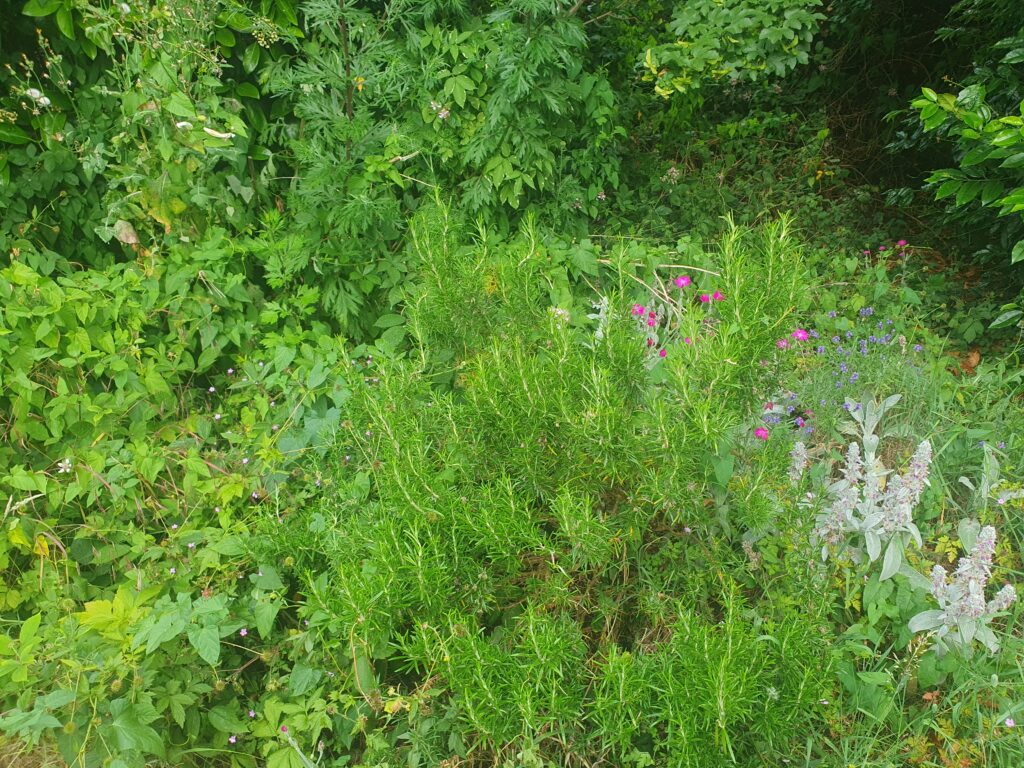
This summer, I’ve chosen rosemary (Salvia rosmarinus) as my Oil and Herb of the Season.
Many people know rosemary as a familiar culinary herb, growing in gardens and releasing its distinctive aromatic scent on warm summer days. Native to the Mediterranean, this evergreen shrub has slender, silvery-green leaves, delicate pale-blue flowers and a long history of use in food, herbal practice, ritual and everyday life.
You may also know rosemary by its former botanical name, Rosmarinus officinalis. Although its classification has changed, both names refer to the same wonderfully aromatic plant.
For me, rosemary feels particularly suited to summer: bright, strengthening and full of character.
Rosemary Through the Ages
Rosemary has long been associated with remembrance, loyalty and protection.
It has appeared in household traditions, ceremonies and funeral customs, and its connection with memory has endured for centuries. Sprigs of rosemary are still worn on ANZAC Day in remembrance of those who died at Gallipoli, where rosemary grew on the surrounding hillsides.
Its familiar place in gardens and kitchens can make it easy to overlook just how deeply rosemary is woven into cultural and herbal traditions.
Rosemary in Herbal and Aromatic Traditions
Traditionally, rosemary has been regarded as a stimulating and strengthening herb. It has been associated with memory, concentration, circulation and digestive support, although the way it is used depends on the individual and the preparation.
In aromatherapy, rosemary essential oil is often chosen when clarity, concentration and alertness are needed. Its fresh, herbaceous aroma can feel uplifting and invigorating, making it one of the oils I think of when preparing for study, writing or any task requiring sustained focus.
Rosemary has also traditionally been included in hair and scalp preparations, a use that continues in modern aromatherapy.
Why I’ve Chosen Rosemary This Summer
What I appreciate most about rosemary is the sense of strength it carries.
There is something upright, resilient and self-assured about the plant. It reminds me of standing firmly in your own authority and remembering who you are beneath the noise and distractions of everyday life.
This feels especially relevant during the brighter months, when so much is growing, developing and asking for our attention.
Rosemary offers a simple invitation: to return to what matters, clear away some of the mental clutter and move forward with greater focus.
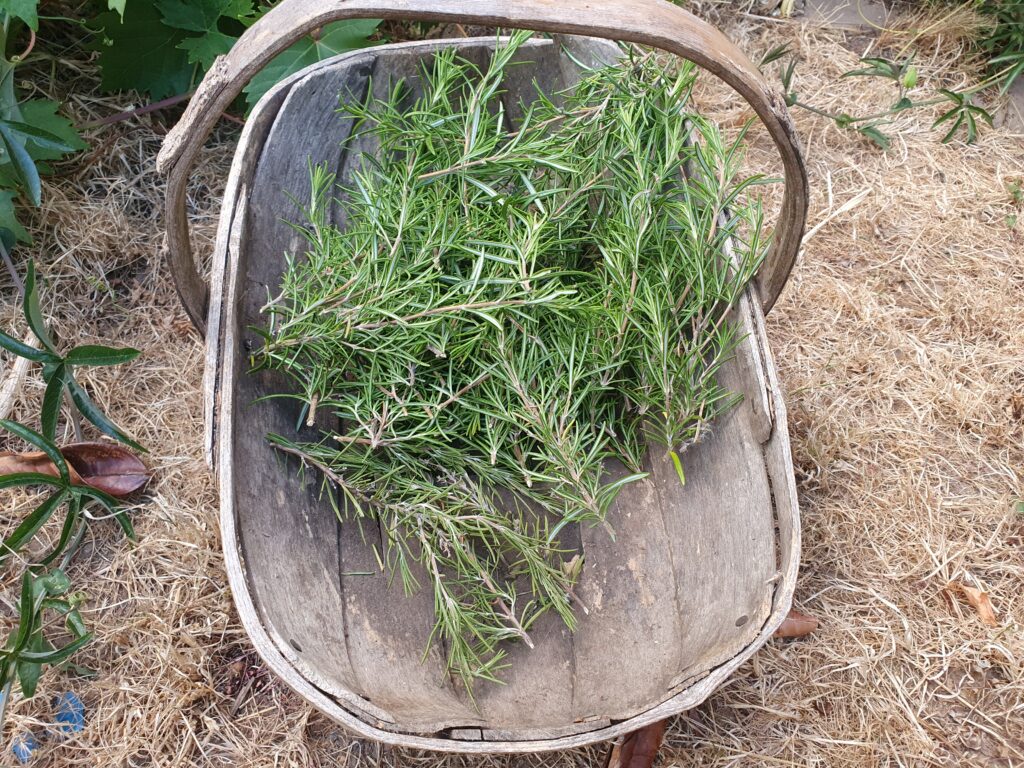
I’ve also been gathering rosemary from my own garden, collecting it in my old trug and drying it in wicker baskets lined with muslin. I’ve enjoyed the process of working with the herb itself as well as the essential oil.
There is something grounding about harvesting a plant you have watched grow and taking the time to prepare it slowly.
Using Rosemary Essential Oil Thoughtfully
Essential oils are highly concentrated substances and should be used with care.
The suitability of rosemary essential oil depends on the individual, their health history, the method of use and the amount being used. Extra care may be needed during pregnancy and for people with certain medical conditions, including epilepsy or seizure disorders.
In aromatherapy, the choice of essential oil or blend is guided by the individual as a whole, rather than by one symptom or concern.
A Bright and Strengthening Oil
Used appropriately, rosemary is a remarkable essential oil: fresh, purposeful and immediately recognisable.
Its long association with remembrance, clarity and vitality makes it a natural choice for this season. For me, it carries both the brightness of summer and the steadiness needed to turn inspiration into action.